Monday, February 10, 2014

Are You Getting Ripped Off With The Prices Of Higher Education?

Senator Rubio of Florida (Rep) is quoted in saying that “American’s, are being priced out of college educations.”
Senator Rubio will be addressing an education forum on Monday at Miami Dade College. Rubio will be addressing issues about the cost of education, making it more affordable and closing the gap in the education deficits by revamping the educational system.  Senator Rubio sounds more like a Democrats than a Republican, I respect his forward thinking for the future of nation, I think I love him. 
The ideas put forth from Senator Rubio are the following:
 ·      State-accredited alternatives to four-year colleges.
·      Independent accrediting agency to assess free courses offered over the Internet as    transferable credits.
·      Income-based repayments for college loans.
·      Colleges should offer cost-benefit analyses comparing how much you can expect to earn in your specific future field and the potential earnings after graduation.
·      Earn certifications or degrees outside of traditional methods
·      Offering “student investment plans”
·      “Private investment firms would cover the cost and would be repaid later as a fixed percentage of a graduate’s income for a set number of years, regardless of whether that amount covers the total debt.” (Something the US military has done for years with professionals e.g. Doctors, lawyers and other professionals and Europe).
I was a little taken back by his proposal, in fact I was impressed and couldn’t agree more with him.  Senator Rubio came up with a well-balanced solution where everyone from the states, government, corporations, educational institutions, and students take some form of responsibility for the student’s education.  Senator Rubio's clever cost alternatives for low-income individuals such as free online education as an alternatives for studying directly at four-year university (assuming it is general education courses being offered online), can been transferred easily to a four-year university.  Another cost effective measure is offering certificates/qualifications as an alternative to a four-year degree, this is something similar to what some countries in Europe offer.   
I would suggest you read the article in full, I didn’t focus on all the information but more on the education reform he is suggesting (basically the bits I liked).  As concerned beings, we need to start thinking outside the box or we will not be equipped for the future, think about all-the human potential out there that’s being wasted ugh, it frustrates me as!!

Bearla International Studies
Elizabeth Koukladas Director

Sunday, February 9, 2014

The Top Five Apps For Students Are...


  • Show me the MONEY!: As we all know money is usually an issue for students. From what I hear from our international students is that they normally eat beans or noodles for dinner, take advantage of the free tasters at the supermarket and schedule their lives around different happy hours in the city! They say they would much rather save their money for trips around the country, and I couldn't agree more, so I would have to say that HotUKDeals is a must for studying in the UK, and that Groupon is practically giving things away in the states. Anything from clothes to manicures, spa days to cinema tickets and free rounds of Golf. And, Both apps are free too, happy days!
  • LogMeIn : Allows users to access and remotely control their work and home computers via iphone or ipad. Great app for business users also. Fees may apply. 
  • Evernote:An easy to use and free app that helps you organised your life and remember everything. 'Men, you will never need a women again!' This apps allows its users to make voice recordings, take notes, capture photos, create to do lists and more. The app won the New York Times 'Top Ten Must -Have App Award', plus numerous other awards. I haven't used this one before, I have just downloaded it, so I will let you know whether or not we get on. Free, but upgrades are available. 
  • Paper By FiftyThree: This is a visually stunning app for jotting down notes, sketching out ideas, keeping a journey and doodling. The reason I place this in the top five is that, thanks to Elizabeth we all now know how beneficial doodling is when a person is trying to concentrate. So using this app in lectures can be especially good for students. Not only that but when your lecturer does say something which needs to be written down-you can do that too. Free app 
  • Duolingo: Learn a foreign language. It teaches you, tests you, and even sometimes fails you, all so you can ace that language class. Free app. 
Thats all for today, I hope these apps are helpful. I am going to be adding to this list as new apps come out. Elizabeth is crazy about apps-she has so many that her ipad runs slower than it should.

Let me know how you get on with these apps or if you have any apps which you are dying to share with someone, than we would love to hear about it!

Amber Williams-Director

Saturday, February 8, 2014

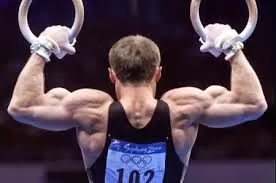
The Olympics, Greece, Russia and the World

The tradition of the Olympics is something that each Greek child is indoctrinated (there were other

indoctrinations but lets focus on this one for now) into at a young age.  I have fond memories of sitting on the sofa with my family chatting loudly, as one does when they are Greeks talking about the Olympics, watching our favorite sports and eating delicious home cooked food.
 The pride we feel as Greeks is abound the remarkable influence the games have had on history rivals no other event on the planet, It is a symbol of something greater than ourselves but of national pride and honor. 
I hope that you enjoy the history of the Olympics, as you know I do love sharing the history and plugging |(yet again) how great the Greeks are! :) 
I would like to thank the contributors of Wikipedia, the free encyclopedia; as they give us a brief (pretty accurate) history of The Olympics, Greece, Russia...and the world!
The Olympic Games (Ancient Greek: τὰ Ὀλύμπια ; ta Olympia; the Olympics) were a series of athletic competitions among representatives of city-states ofAncient Greece. They were held in honor of Zeus, and the Greeks gave them a mythological origin. Historical records indicate that they began in 776 BC inOlympia. They continued to be celebrated when Greece came under Roman rule, until the emperor Theodosius I suppressed them in 394 AD as part of the campaign to impose Christianity as the state religion of Rome. The games were held every four years, or Olympiad, which became a unit of time in historical chronologies.
During the celebration of the games, an Olympic Truce was enacted so that athletes could travel from their countries to the games in safety. The prizes for the victors were olive leaf wreaths or crowns. The games became a political tool used by city-states to assert dominance over their rivals. Politicians would announce political alliances at the games, and in times of war, priests would offer sacrifices to the gods for victory. The games were also used to help spread Hellenistic culture throughout the Mediterranean. The Olympics also featured religious celebrations and artistic competitions. The statue of Zeus at Olympiawas counted as one of the seven wonders of the ancient world. Sculptors and poets would congregate each Olympiad to display their works of art to would-be patrons.
The ancient Olympics had fewer events than the modern games, and only freeborn Greek men were allowed to participate, although a woman Bilistiche is also mentioned as a winning chariot owner. As long as they met the entrance criteria, athletes from any city-state and Macedon were allowed to participate, although the Hellanodikai, the officials in charge, allowed King Alexander I to participate in the games only after he had proven his Greek ancestry.  The games were always held at Olympia rather than alternating to different locations as is the tradition with the modern Olympic Games.  Victors at the Olympics were honored, and their feats chronicled for future generations.
The modern Olympic Games (French: Jeux olympiques,) are the leading international sporting event featuring summer and winter sports competitions wherein thousands of athletes variously compete. The Olympic Games are considered the world's foremost sports competition with more than 200 nations participating.  The Olympic Games are held every four years, with the Summer and Winter Games alternating by occurring every four years but two years apart. Their creation was inspired by the ancient Olympic Games, which were held in Olympia, Greece, from the 8th century BC to the 4th century AD. BaronPierre de Coubertin founded the International Olympic Committee (IOC) in 1894. The IOC is the governing body of the Olympic Movement, with the Olympic Charter defining its structure and authority.
The evolution of the Olympic Movement during the 20th and 21st centuries has caused several changes to the Olympic Games. Among these adjustments are creating the Winter Games for ice and winter sports, the Paralympics Games for athletes with a disability, and the Youth Olympic Games for teenage athletes. The IOC has adapted to economic, political, and technological advancements, shifting the Olympics from pure amateurism, as envisioned by Coubertin, to allow participation of professional athletes. The growing importance of mass media created the issue of corporate sponsorship and commercializing the Games. World wars caused the 1916, 1940, and 1944 Games' cancelling. Large boycotts during the Cold War limited participation in the 1980 and 1984 Games.
The Olympic Movement comprises international sports federations (IFs), National Olympic Committees (NOCs), and organizing committees for each specific Olympic Games. As the decision-making body, the IOC chooses the each celebration of the Games' host city, which organizes and funds the Games according to the Olympic Charter. The IOC determined the Olympic program, which comprises the sports to be contested at the Games. Several Olympic rituals and symbols; e.g., the Olympic flag, torch, and opening and closing ceremonies. Over 13,000 athletes compete at the Summer and Winter Olympic Games in 33 different sports and nearly 400 events. The first, second, and third place finishers in each event receive Olympic medals: gold, silver, and bronze, respectively.
The Games have so grown that nearly every nation is represented, creating many such challenges as boycotts, doping, bribery, and acts of terrorism. Every two years the Olympics and its media exposure provide unknown athletes with the chance to attain national and sometimes international fame and the host city and country to present themselves to the world.        
Winter Olympics Opening Ceremony
Josh Haner/The New York Times
 SOCHI, Russia — With an outsize extravaganza that reached deep into the repertory of classical music and ballet, traversed the sights and sounds of the world’s largest geopolitical expanse, soared into outer space and swept across millenniums of history in a celebration of everything from czarist military might to Soviet monumentalize, a swaggering, resurgent Russia turned its Winter Olympic aspirations into reality on Friday night.
After seven years of building to this moment — the opening of what is believed to be the most expensive Olympic Games in history — the message of the over-the-top ceremony was simply this: In a big way, Russia is back.
As if there were any doubt.
(Where Russia may be headed — amid an economic slowdown, continuing rights abuses and suppression of political dissent that have drawn sharp criticism, especially in the West — was a question for another day.)

The 18-chapter, nearly three-hour opening ceremony began at the symbolic moment of 8:14 p.m. — 20:14, as time is counted here — and provided a majestic spectacle that included a glowing troika of horses made of light streaking through a snowbound sky, the multicolor onion domes of St. Basil’s Cathedral bobbing in the air; literary references to Gogol, Tolstoy and Nabokov; images of Stalinist skyscrapers; and performances by Russia’s storied ballerinas, musicians and singers.
Bearla International Studies
Elizabeth Koukladas Director

Wednesday, February 5, 2014

Calling Uni Students! A Chance To Win A 5 Day Trip To NYC!

Many languages, one world. 

The United Nations are holding an essay writing competition 'United Nations Academic Impact Student
Essay Contest'

'Write an essay (2000 words or less) discussing the ideas of global citizenship and understanding and the role that multilingual ability can play in fostering these. Your essay should reflect your academic, cultural and national context.'

Essay Submission Deadline: February 21, 2014
Airfare, room and board provided. 

Winners participate in a 5 day International Youth Forum in New York and present their work at the United Nations Headquarters on June 27th

Another fantastic opportunity! Get writing and submitting and then, when you win-send me some pictures of yourself in NYC having the time of your life!!

Apply here: http://www.els.edu/en/ManyLanguagesOneWorld. 

Amber Williams
Director-Bearla International Studies. 


Tuesday, February 4, 2014

Equality Does Not Exist In Our Education System

College presidents went to the White House on Thursday to discuss attracting more low-income students to higher education.
Admissions leaders were tasked with defining how they judge merit.  Who is admitted?  Who gets aid?  Who gets priority status with limited aid budget?
The attendees of the meeting turned to the define merit through two dictionaries the Latin and Greek (of course the Greeks!!  If you hadn't guessed by my last name, I am Greek) and philosophy. 
The consensuses on merit was that it’s not enough to just have the highest grades and test scores.  One aspect they did agree upon was recruiting more socioeconomically diverse class is a great thing, the majority agreed.
Vassar College returned to need-blind admissions in 2007, and Vassar has not changed course since, 2007 wasn’t the ideal time to change to a need-blind admissions because of the economic downturn.  However, since shifting the discount rate has gone from 35% to 50% rapid growth but the share of students from minority groups has grown from 20% to 35%.
 “Georgia Nugent, president Emerita of Kenyon College and a senior fellow at the Council of Independent Colleges, who has campaigned against the use of non-need-based aid, said it was time to stop calling such awards "merit aid."
When colleges say "merit aid," in this context, they mean "a student or family with sufficient means to pay for college education but they want to get a good deal and they want bragging rights," she said. "So-called merit aid is awarded neither because the student has earned it nor because we are meeting the objectives of our colleges."
Another term Nugent attacked: "need-sensitive." Colleges that do not practice need-blind admissions use the term to refer to policies under which, at some point in the admissions process, they only accept students who can afford to pay their own way. Nugent said that when she first became a college president, "foolishly I thought the term meant sensitive to the needs of our students," adding that "I learned it meant the opposite."
Nugent -- a classicist by training -- said these phrases matter. "When the language we use is disordered, it’s often a clue that our practices are less than admirable," she said.
Nugent said that the moral arguments against these practices were well known for years, but that -- at a certain point -- people took courageous stands, built alliances and made changes -- sometimes at risk to themselves.
Many speakers were frustrated with the current system of admissions, because of the advantages wealthier applicants have over less financially affluent. The wealthier students are able to utilize their wealthy to beef up their applications and make them stand out more. 
Donald E. Heller, dean of the College of Education at Michigan State University, gave the attendees at the conference a logical argument to do away with merit:
"Take any one of our selective institutions, and look at the scholarship athlete, or legacy, or for that matter, any student who was admitted and had the lowest academic credentials, however you want to choose to measure those credentials. I'll assert that this is a decision to establish a floor at which the institution has determined any student can succeed. Right? If we admit the student, then we're making a statement that the student can succeed at our institution."
Merit is not a necessary aspect of the admissions process it only clouds the judgment of the admissions application.  When the majority of the attendees agreed that recruiting more socioeconomically challenged students would be a plus than merit would be counterproductive to the objectives of recruiting more socioeconomically challenged students.  Our education system should never promote class differences, and the admissions process should be blind to the applicants, it should allow all people to have the same opportunity to create any life they choose, free from others limitations and predigest.  This is our birth right as Americans….
Please follow the link to read a full article on the issue, written by Scott Jaschik.

Monday, February 3, 2014

Electronic Admission Applications And Wordpress-A Match Made In Heaven For Students.

I found an article this morning by Justin Dunnavant listing the advantages of learning and using Wordpress-the WordPress is the internet’s largest blogging platform and is the foundation of nearly 20% of all webpages on the internet. Many popular blogs and websites run on WordPress. You do need some concentration and patients to learn the program but it’s a worthwhile platform for students and young entrepreneurs to invest their time learning.

You may remember last weeks blog describing the benefits and excitement around the new electronic university admissions applications; I think that wordpress would be the perfect addition to this. One of the beauties of the new application is that you can add links to your personal website to show your achievement and hobbies; allowing your admissions expert to get to know you better. 'Scary thought' I can hear Elizabeth saying! 

Within a couple of hours you can have your own website, which you will be able to update as often as you wish; portraying all the best things about your character without having to pay painful fees. Students who are travelling abroad can take advantage of the blogging aspect of wordpress, allowing you to keep your friends, family and fans informed about your journeys.

Students have a wonderful opportunity with Wordpress to sell their strengths and to show how passionate they are about their hobbies. Photos and videos can be uploaded to your blog or to your website. 

So students, develop an online presence, be creative. If you are passionate about a certain career, then encompass this career into your website and let people see how knowledgeable and, more importantly, how passionate you are about your future career. Don't forget to mention any special awards you have won and if you want to, you can gain followers too. Have fun!

Amber Williams
Bearla International Studies. 

Saturday, February 1, 2014

Chinese New Year Celebrations. Los Angeles.

Amber and I had a great time today at the Chinese New Year Parade in Los Angeles.  So to keep with the
theme we have listed the Chinese signs and what the Year of the Horse represents for 2014-2015 year.  I hope you enjoyed the year predictions along with the photo of the parade!!  Amber will be uploading lots more photos and videos of the celebrations tomorrow.

It’s the Lunar New Year and the Chinese Year of the Horse. The horse is part of a 12-year-cycle of animals that make up the Chinese zodiac. These interact with the five elements: wood, metal, fire, water, earth. 2014 is the year of the wood horse, taking over from the year of the water snake.

GET READY TO RUMBLE
It will be a fast year full of conflicts according to some astrologers, who see wood as providing fuel for the energetic horse sign. The later part of the year is “yin fire”, increasing the potential for heated clashes even more.Feng shui practitioner Raymond Lo told Reuters: “The upcoming Horse year is also a 'yang wood' year, when people will stick more to their principles and stand firm. So it is hard to negotiate or compromise as there are more tendencies for people to fight for their ideals.”
BAD FOR BUSINESS?
If you have a business involving wood or fire you will do well, according to Canadian Feng Shui expert Paul Ng. This includes lumber companies, agriculture and media companies. Property companies won’t do as well and as the horse is a galloper, the potential is for the prices to gallop downwards over the first six months. However, supported by the fire element in the latter half of the year they may gallop back up, according toLynn Yap, Singapore’s Feng Shui Queen. Metals and waters will do badly: this will affect metal mining and precious metals as well as fishing. Financial business also have the potential to be unstable. We could have predicted that one though.
WATCH OUT FOR VOLCANOES
Countries in the Southern Hemisphere, like South Australia and South America may experience gunfire as well as volcanoes, because “ the fire energies are so strong” according to Chinese astrologer and Sydney Feng Shui master Lok Tin, who spoke to the Sydney Morning Herald about his predictions for the coming 12 months.
LIE LOW IF YOU’RE A HORSE.
When horse meets horse, the natural Ying-Yang opposition is no longer balanced and thus over the next year horses are due some tense situations and pressure in their personal life. However Foon Chik, of the Feng Shui Society says it is not that simple and meeting your own sign can be a time for self-reflection.
WHAT IF YOU’RE NOT A HORSE?
Well, what animal you are depends on what year you were born in and how the characteristics of this creature interact with the horse.
Courtesy of independent.co.uk Felicity Morse

Bearla International Studies
Elizabeth Koukladas Director